Silicon Valley's Roach Motels
Escaping note-taking hell through a decade of digital experiments, false starts, and the surprisingly emotional relationship we form with our digital thinking spaces.

Breaking Up With Your Notes
I've finally ended a five-year, $500 relationship with the best note-taking system I've ever used – not because it stopped working, but because the relationship had changed. We form emotional bonds with our thinking spaces that defy rational analysis. When digital tools become extensions of your brain, even a committed relationship can feel like slow abandonment as development cycles cool and communities scatter.
This isn't just another "I switched apps" post where I breathlessly evangelize the latest digital savior. Instead, it's an exploration of that weird, twisted relationship where we stick with digital tools long after they start pissing us off – and why your meticulously crafted folder hierarchy is probably making things worse, not better.
We invest ourselves in these systems, pouring in not just information but methodologies, workflows, and mental models. When these platforms disappear, they don't just take our data with them – they erase entire architectures of thought that had become extensions of our thinking. And yet we keep signing up for the next shiny app, convinced that this time our digital thoughts will finally have a forever home.
A brief aside on roach motels: For those fortunate enough to have never encountered these charming pest control solutions, a roach motel is a small cardboard box with sweet-smelling poison that lures insects in through a one-way entrance. The name comes from their infamous design principle: once something enters, it's never leaving; the insect world's equivalent of Hotel California.
Stockholm Syndrome
My digital past is littered with abandoned formats and systems. Digital tools seduce with promises of productivity, then trap my data in formats that become digital fossils – perfectly preserved but utterly useless. It's the classic cycle: initial excitement, obsessive data input, system complexity growth, inevitable abandonment, and finally, the data crypt – where my thoughts go to be perfectly preserved yet perfectly inaccessible.
Uni forced me into note-taking. As lecture information piled up like an avalanche threatening to bury my GPA, I cycled through digital tools that each failed me in creative ways. I quickly shelled out for an iPad 4 with one of those rubber-tipped abominations they called "styluses" in 2013. Remember those? One pressure level, zero palm rejection. The iPad registered my palm as enthusiastically as the stylus itself, turning every note into a collaborative art project between my hand and forearm.
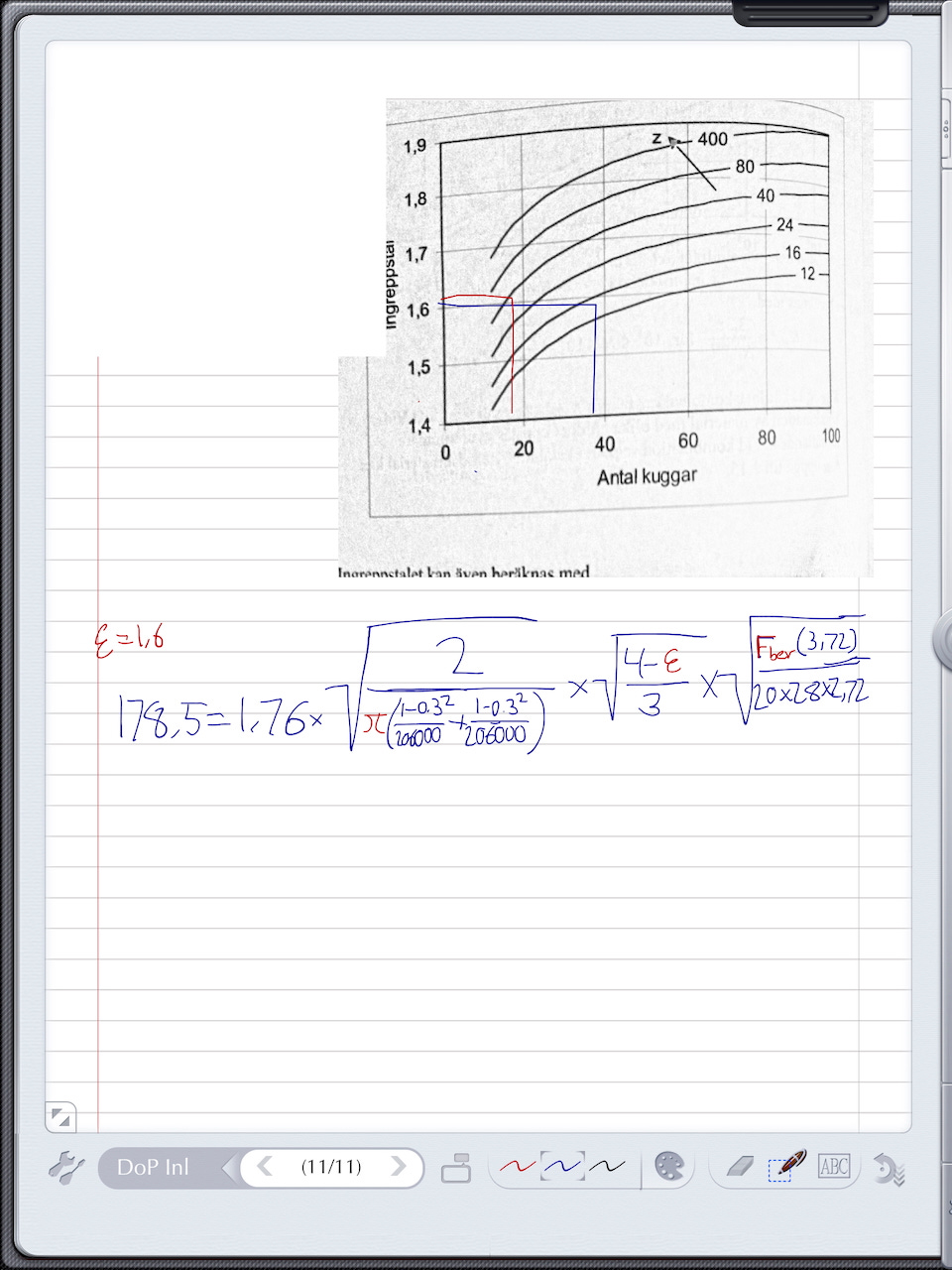
After hundreds of hours drawing circuit diagrams and scribbling Maxwell's equations, where did those notes end up? Exported as "universally accessible PDFs" (ha!) now probably buried in a Google Drive folder I haven't opened since 2016. They might as well be carved into stone tablets at the bottom of the ocean.
Evernote and OneNote became the digital equivalent of one-night stands–briefly exciting until the morning light revealed their fundamental inadequacies. I dutifully synced my thoughts to their clouds until they inevitably changed their pricing model or redesigned their UI into unusability.
I even subjected myself to org-mode during a particularly masochistic phase as a new developer.
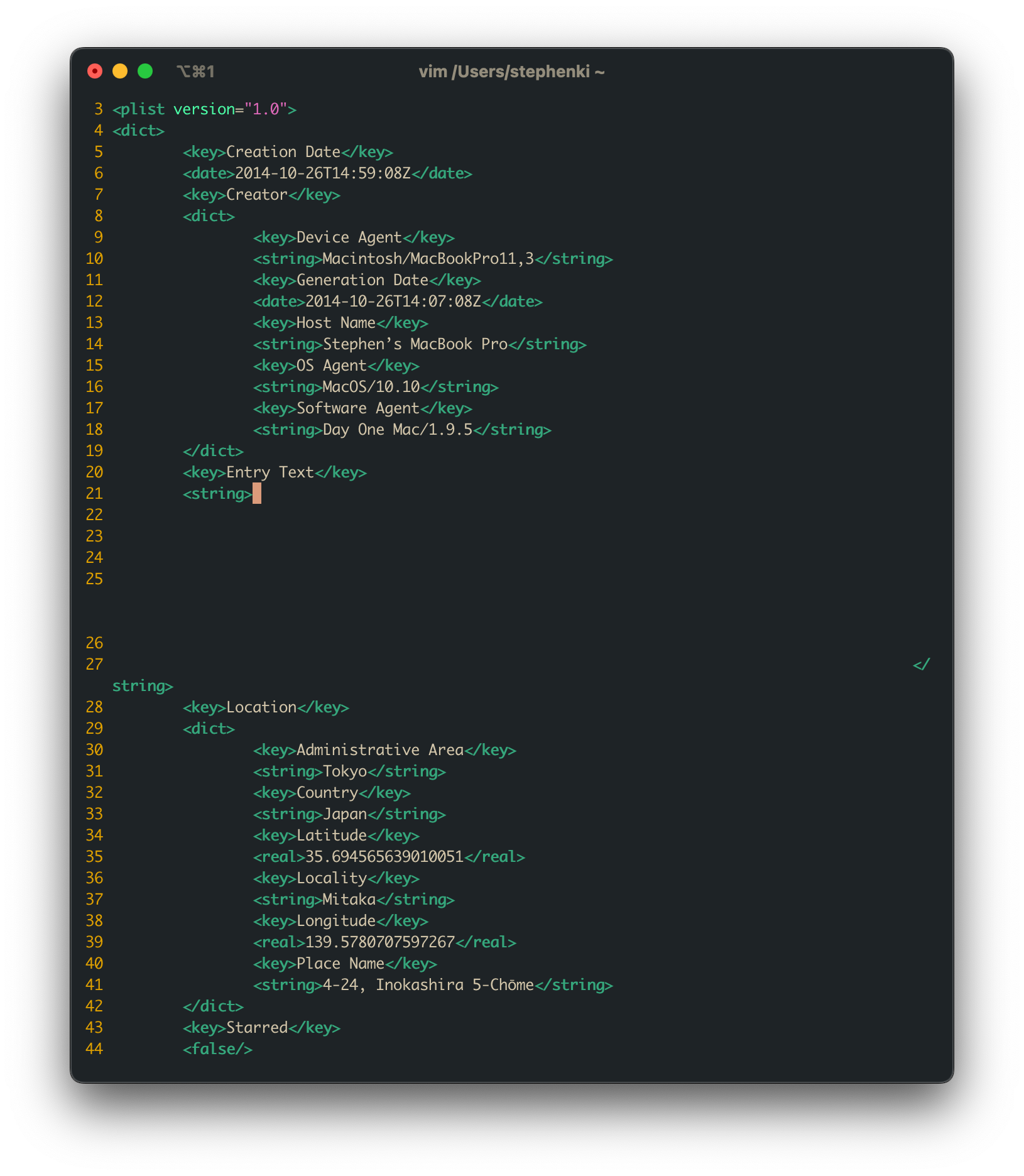
From XML structures courtesy of Day One (when they deprecated the app one year after I bought it), to PDF dumps of the doodles from my electrical engineering classes, I have digital graveyards in a variety of formats scattered across several different Drive services.
Throughout it all, Apple Notes remained my digital junk drawer – a decade-deep archive of random thoughts, shopping lists, and horrible 2AM draft emails to senior colleagues better off remained unsent. Meanwhile, task management lived in parallel systems like Todoist, creating a permanent disconnect between what I thought and what I planned to do.
In the best case, these tools seduce you with their polished interfaces and effortless onboarding – "just start typing and we'll handle the rest!" And for a while, they actually deliver on that promise. But then the tool dies out, gets sunset, or pivots to a "new paradigm" that makes your data format obsolete. Then comes the panicked question: "How am I going to get my stuff out of here?" The answer is usually a resigned sigh as you realize the effort required to extract your thoughts from whatever specialized format they've been entombed in isn't worth it.
Perhaps most maddening of all, most of these tools come packaged with the same dusty hierarchical structures we've been suffering through since the dawn of computing. Create folder, create subfolder, forget where you put things, create new folder, repeat until you've built a labyrinth so convoluted you can't find your own thoughts inside it. No wonder we're constantly searching for better systems.
This Isn't About Productivity, It's About Finding My Damn Stuff
My gloriously chaotic brain and traditional note systems exist in a state of perpetual war. They promise organization but deliver paralysis. Times amany I'd stand frozen before an open suitcase, caught in a cognitive loop between remembering what I needed to pack and simultaneously creating taxonomies to organize those needs.
Computers demand we place everything in neat folders or chronological streams, while our minds create messy, interconnected webs. We need to know exactly where to put each thought, else it gets lost in digital oblivion. And the productivity industrial complex sells us digital filing cabinets with increasingly elaborate labeling systems, promising control but delivering anxiety.
Is it too much to ask that I type packing list and summon every relevant checklist I've ever crafted, complete with annotations about that one phone charger I inevitably leave plugged into hotel wall sockets? I've grown weary of my "Travel Planning" folders – meticulously organized during bursts of productivity-porn enthusiasm, then abandoned like New Year's resolutions by February.
And when I'm preparing for that awkward catch-up with someone I've interacted with exactly 3.5 times over 18 months, I want to type their name plus "meeting", and have my digital familiar conjure a complete relationship timeline without me performing archaeological excavations through years of chat logs and email threads. I don't need another “productivity” “system”; I need a digital memory that actually remembers the way I do – chaotically, contextually, and by association.
While still nursing the headache from my 18-month org-mode fever dream that eventually collapsed like a house of cards, 2020 arrived with its pandemic isolation – and suddenly Roam Research clicked in a way nothing else had before.
Not immediately, though. Like any good developer given a shiny new abstraction, I first spent months meticulously building elaborate castles of tags and pages—intricate taxonomies optimized for theoretical workflows I hadn't even tried yet. I proceeded to visit these carefully constructed digital palaces exactly never. The true breakthrough would come only after I stopped trying so hard to architect the perfect system.
The Garden That Grows While You Sleep
The turning point came when I abandoned my grand ambitions and simply poured my mental overflow into daily journals without agonizing over perfect organization. Even as I roll my eyes at my own metaphor, the connections grew organically, like a garden that grows itself while you sleep. Flowers, and all that.
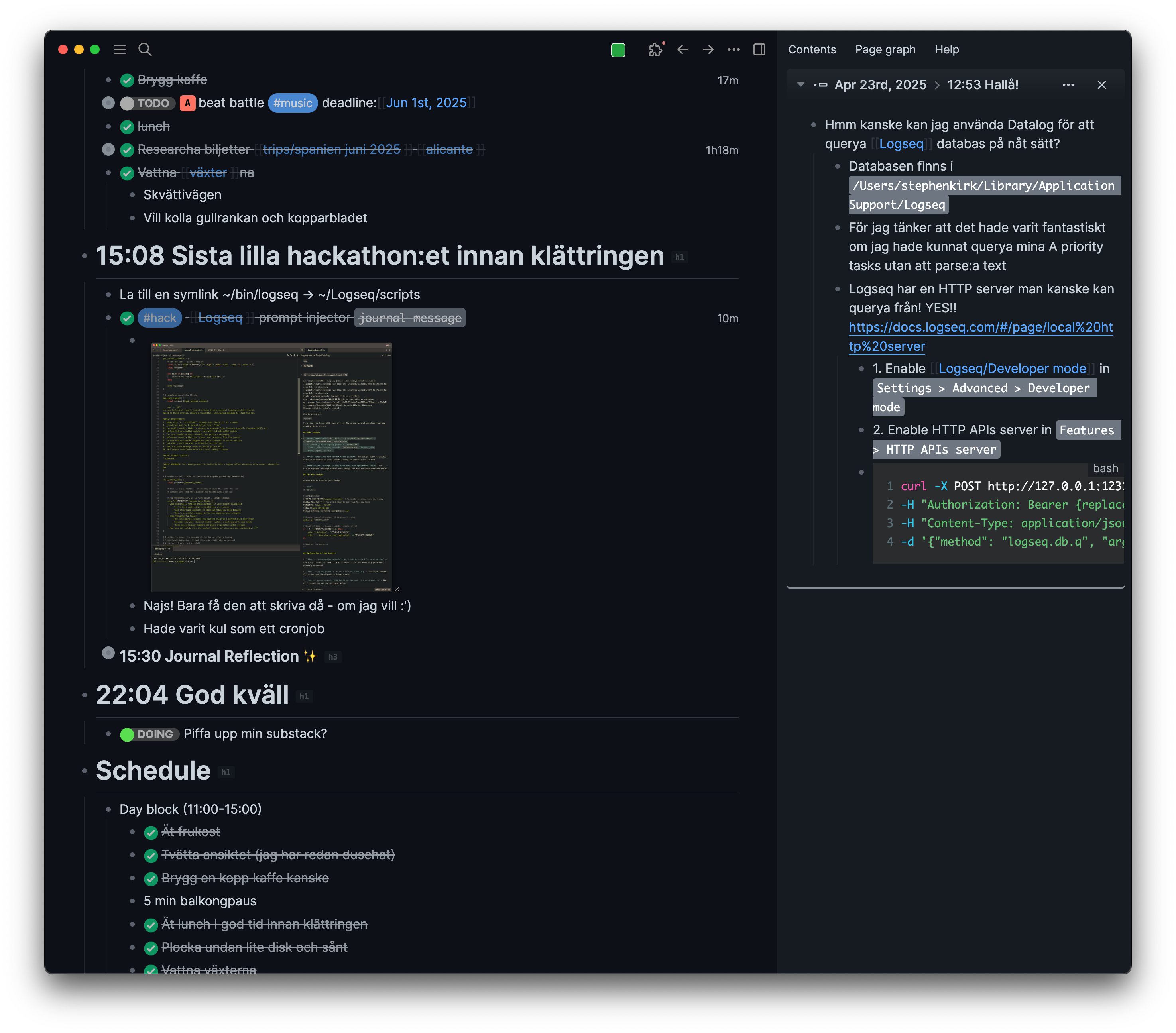
I've watched myself build the same meticulously crafted folder hierarchy in through various apps over my entire computer literacy legacy which must span like 25 years by now. The chaotic pile of daily notes somehow works better than any system I've designed. Just write things down, move on with life, and trust they'll resurface when needed.
The magic happens in the mundane. I maintain a digital inventory of cables. It's barely a system – I periodically catalog loose cables with location tags like #inventory/desk-drawer or #inventory/storage-bin. When I need a specific connector, I search "#inventory HDMI" instead of ransacking three different drawers like a caffeinated raccoon. Total lifetime investment: maybe twenty minutes.
This ridiculously simple approach saves me more time than any elaborate folder hierarchy I've ever built. The brutal irony is that my most useful knowledge systems are the ones I've spent the least time designing. Throw in some backlinks, capture streams of thought as they happen, and suddenly my random musings become usable without the cognitive overhead of deciding where each thought "belongs."
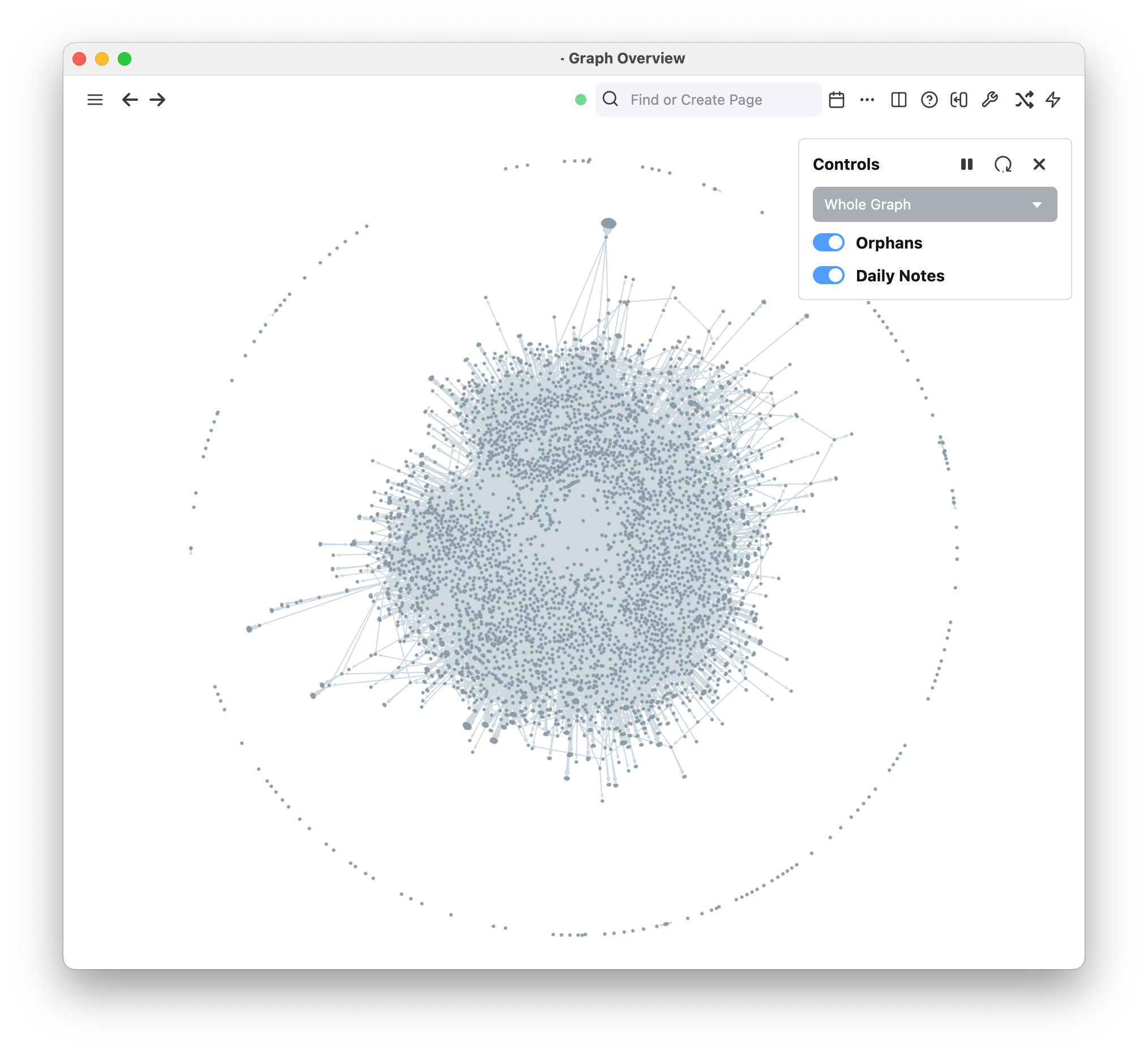
I could show you screenshots of my knowledge graph with colorful nodes and tangled connections like every Medium influencer trying to sell you on becoming a "thought leader." I won't, because:
It's a spectacular waste of your time and attention
If my second brain were actually worth showing off, I'd be concerned I was organizing it for an audience rather than for myself
The entire concept of "knowledge graphs" is digital snake oil
Okay, fine – maybe I'll indulge in a little graph voyeurism after all.
All this productivity pageantry becomes hilariously useless when you're frantically trying to remember how you navigated that crucial conversation last quarter, or what obscure configuration triggered that production outage that had you sweating at 2AM three months ago. In that moment of crisis, those elaborate systems you've gloated about on Twitter are about as helpful as those refrigerators that show ads on the front panel.
Your brain doesn't file memories into neat folders; it creates messy, context-dependent associations. That elaborate Psychology/Mental Models/Decision Making/Cognitive Biases/Dunning-Kruger hierarchy becomes its own knowledge management problem. You're engaging in taxonomic masturbation, debating whether notes belong in Reading/Non-Fiction/2024 or Topics/Philosophy/Stoicism when all you really wanted was to find that one thing you read about impostor syndrome during some 2AM doom-scrolling binge two years ago.
There's a predictable lifecycle to these tool communities. First come the true believers with their immaculate setups and pastel-themed screenshots1. Then the workflow wizards who build impressive automations nobody asked for. Finally, the quiet exodus as we all realize we've spent more time optimizing our systems than using them. I've had front-row seats to this show more times than I care to admit.
Digital Extinction Events
Digital history is littered with beloved tools that vanished overnight, taking not only users' data with them but also the workflows, communities, and knowledge networks that had formed around them.
Tools like Mailbox (whose swipe-based email triage became muscle memory for thousands) and Atom (whose plugin ecosystem created powerful workflows that vanished when GitHub pulled the plug) disappeared overnight. Even beloved communities like What.CD – with its meticulously curated music library and recommendation algorithms – evaporated in an instant, taking with it irreplaceable cultural archives and discovery mechanisms built over years.
Last.fm has been sending me desperate "please subscribe" emails for a decade while I continue using their service for free, only to dread its inevitable demise. When it finally shuts down, it will take with it 15 years of carefully tracked music history – from black-eyeliner bedroom meltdowns to pretentious ambient phases I'd rather forget.
Five Years and 500 Dollars Later: When Your Digital Cathedral Becomes a Ghost Town
I made the financial equivalent of a marriage proposal to Roam Research – $500 upfront for five years, no takebacks. Drunk on the Kool-Aid, I eagerly participated in their crowdfunding round, throwing additional hundreds at the altar of my new digital religion. That's not counting the hours invested building workflows that eventually became muscle memory, or the embarrassing evangelizing I did to anyone who'd listen (and several who wouldn't). For a while, this commitment felt justified. My notes actually made sense. I could find things. The automatic exports meant I wasn't technically trapped, just voluntarily institutionalized.
The relationship deteriorated with the subtlety of a frog in gradually warming water. Updates slowed from "wow, that was quick" to "huh, been a while" to "are they still making this thing?"
The community scattered across platforms like digital refugees – from Discourse to homegrown forums to a Discord server gathering dust, before finally settling in a Slack workspace that's technically alive but functionally dead since 2021. Each migration shed users like a molting cicada, turning yesterday's evangelists into today's silent ex-users.
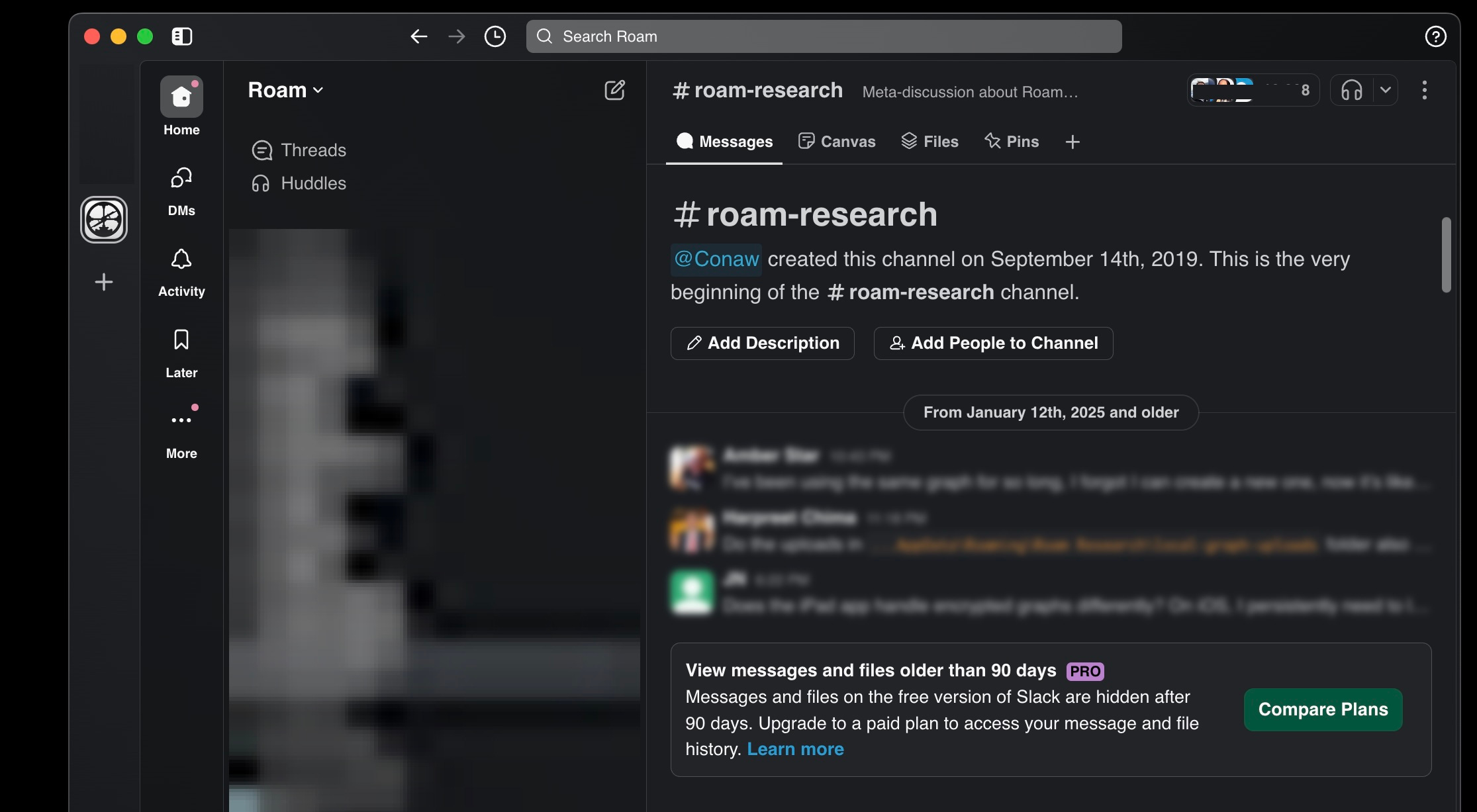
Somewhere on X (formerly Twitter, and another digital relationship I'm questioning), power users still share advanced Roam workflows – arcane spells piping data through semi-documented APIs and custom JavaScript. A secret handshake society of digital tinkerers extracting magic the rest of us can only glimpse through screenshots. But these wizards grow harder to find with each passing month, like an endangered species of digital craftspeople. Meanwhile, Roam's founder tweets about memetic philosophy and politics instead of his product – the same fingers that once furiously churned out announcements for game-changing features every week now ghost the community that funded his vision.
Look, I'm not here to bash Roam, or dig at anyone's priorities. The product solved genuine problems for thousands of digital hoarders like me. The plugin ecosystem remains impressive – a testament to developers who built extensions bridging gaps in the core experience with more dedication than should be expected from unpaid labor. The cult following wasn't accidental – Roam delivered genuine innovation when most note-taking apps were just repackaging the same stale folder paradigms.
I just started getting that familiar itch – the feeling that I was building another beautiful prison for my thoughts. This wasn't a technical failure – the product still works perfectly fine. But as my subscription renewal loomed on the horizon, I couldn't shake the feeling of a relationship past its prime. And with the AI Revolution™ well underway (side effects may include hallucinations, job displacement, and existential dread), I felt a newfound urgency to keep my notes on my own machine, safe from whatever digital extinction event awaits us next.
Meetings About Meetings

A sudden career pivot granted me unexpected breathing room, and I finally surveyed the note-taking landscape that had evolved while I was busy having meetings about meetings.
Over the years, I watched Obsidian transform from clunky markdown editor to ecosystem with plugins for anything imaginable – eventually becoming so mainstream even my non-technical friends were using it. Meanwhile, Logseq had been quietly recommended by a few trusted sources as a less intimidating alternative, with that familiar outline-based approach I'd grown accustomed to. I briefly considered Notion after scattered success with team workflows, but remembered the hellscape that is their search functionality and closed the tab.
After surveying the landscape, I gravitated toward Logseq. The deciding factor? My brain simply works in bullet-level outlines. Compared to Obsidian (the PKM community's golden child), Logseq won't win any speed-of-development awards. But outlining in Obsidian felt clunky, like cupholders attached to a motorcycle with duct tape. Logseq has that "outliner DNA" that made early Roam click for me.
When Your Notes Finally Stop Fighting Back
Logseq delivers Roam's core benefits without the subscription anxiety hanging over your knowledge graph. Its linked references system feels instantly familiar, letting me retroactively connect thoughts across time and context. But there's one crucial difference I've grown to cherish: everything exists as plain text files I genuinely own rather than data in a database somewhere, ready to escape should this relationship also turn spooky.
I still live primarily in the daily notes. But when inspiration strikes for a specific project – maybe an article draft or some half-baked thoughts worth sharing – I just type #[[Article/Name]] from wherever I am and watch an actual Markdown file materialize in my filesystem. The real freedom comes next: I can fling that content anywhere my productivity-obsessed heart desires.
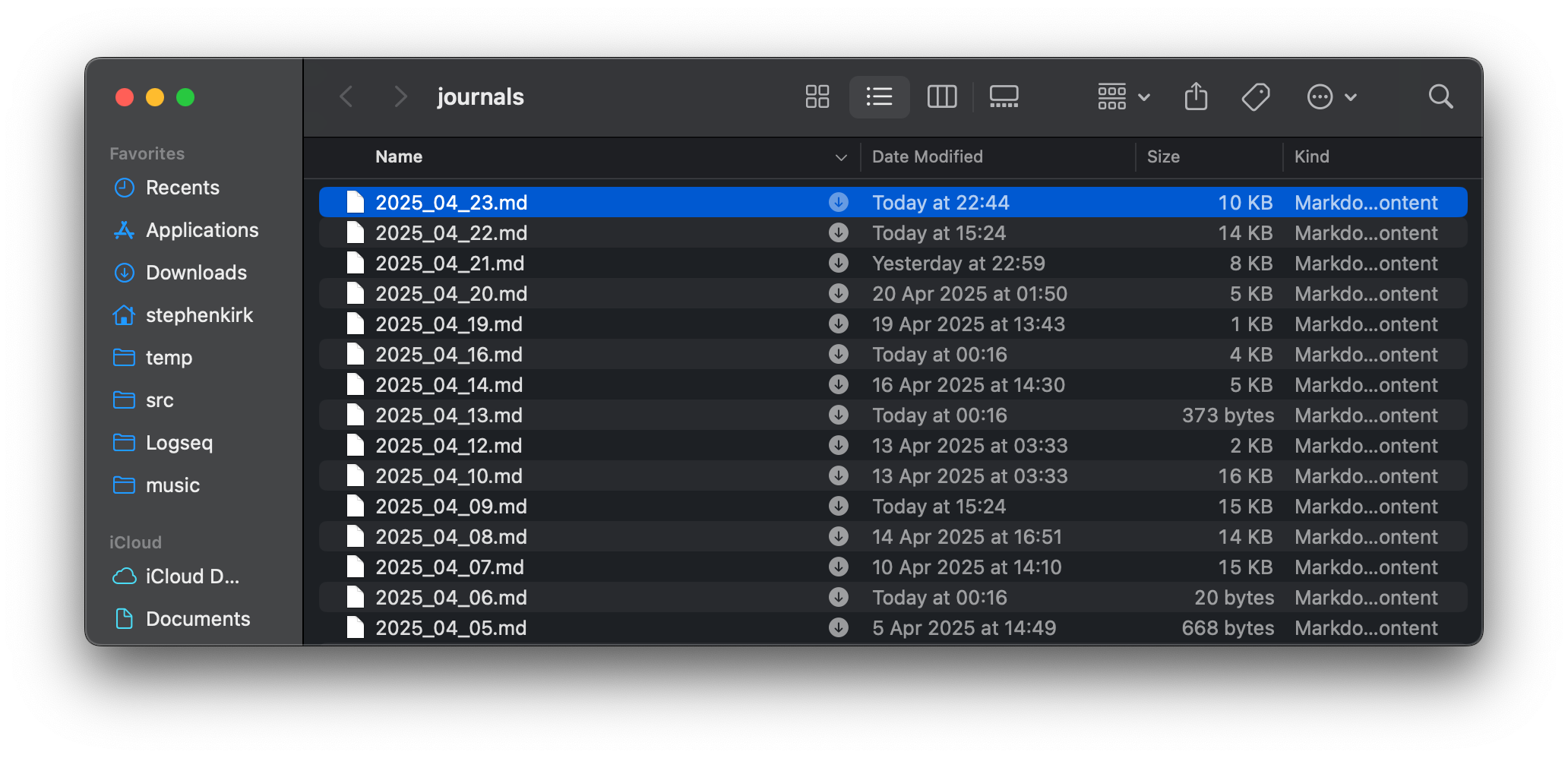
Need a polished PDF? Drop it into iA Writer. Want formatting overkill? Word reluctantly accepts my plain text offerings. Feeling particularly masochistic? I'll pipe it through some janky bash script I cobbled together at 2AM while questioning my life choices. My notes finally bend to my workflow whims. With a quick CMD-D CMD-A, any note opens directly in Zed, where vi motions and AI tools await my bidding. Edit, save, and watch those changes sync back to my knowledge graph like magic – except unlike magic, I understand how it works because it's just files.
Logseq itself feels mostly slick and responsive on desktop. But let's not mistake this for digital note-taking nirvana – I've been burned too many times to believe I've found "the one." As we'll see, this relationship has its own special brand of dysfunction waiting in the wings, particularly when we venture into mobile territory.
The Mobile Disaster
Moving to Logseq was less like upgrading software and more like adopting a quirky pet – frustrating yet strangely endearing in its first week. It demands attention when I thoughtlessly dump duplicate notes into its root directory, insisting I rebuild the entire graph. Sometimes it stares blankly, refusing to recognize files sitting plainly in its field of view. These desktop peculiarities eventually became charming quirks in our developing relationship. This wasn't my first PKM rodeo, after all; I'd already weathered six grueling months of Roam's identical initiation rituals.
The mobile experience, however, nearly sent me crawling back to Roam – less an app and more a digital Kafka novel where the protagonist never reaches the castle.
Act I: The mobile app greeted me like an enigmatic puzzle box – no instructions, just cryptic options to "create" or "open" a graph. Turns out my files needed to reside in an iCloud folder so intuitive it's practically hidden: ~/Library/Mobile Documents/iCloud~com~logseq~logseq/Documents/.
Act II: After relocating my graph, I was treated to the digital equivalent of watching paint dry. Reddit enlightened me that the blank screen was actually progress – 25 minutes of coffee-brewing later, it finally admitted it was "parsing" my files. Victory!
Act III: Or so I thought. Sync errors appeared whenever I dared touch the journal files. I demoted the app to read-only status, but within days, it stopped syncing altogether, like a sulking teenager who'd been asked to do chores.
There's irony in abandoning a tool when its core function worked perfectly. I'll give Roam some well-earned praise: their mobile capture system was simple, well-designed and actually worked. Quick capture was janky but reliably fast, and sending to daily notes deposited thoughts exactly where they belonged without drama. Over the years, I've experienced a grand total of maybe two sync conflicts, and even those never actually destroyed data – just created duplicate blocks I could easily merge.
Logseq's iCloud syncing has proven problematic enough that I've largely abandoned it for the perfectly efficient workflow of capturing on-the-go thoughts in Notes.app to later manually transfer them to Logseq – exactly why technology was invented.
Full Circle: The Junk Drawer's Revenge
My thoughts now commute to work, just like I did. They begin as quick captures in Apple Notes when I'm out walking, standing in line, or lying in bed. Maybe I throw half-baked concepts into Claude until something coherent emerges. Later, when I'm finally at my desk with a proper keyboard, I eventually migrate them to their permanent home in Logseq.
There's something almost meditative about this twice-daily thought migration — a chance to reconsider and refine ideas as I transplant them, I convince myself, while manually copying and pasting text like it's 1999 and I'm building my first website. But let's be honest: it's a ridiculous technological regression.
I've accepted Notes because it's rock-solid reliable. My thoughts appear instantly across devices, never vanish into digital limbo, and the app launches in milliseconds. It's a perfect quick-capture tool – until it's not. Because what Apple Notes provides in reliability, it utterly obliterates in portability.
Notes.app users are stuck in the digital equivalent of a roach motel – notes check in, but they don't check out. At least not without a ransom of time and patience.
Want to liberate your thoughts from Apple's Notes.app? Be prepared for a journey to Apple's privacy portal and submit a formal data request for your data. Or, you can try your luck with these Reddit threads where desperate users share the arcane rituals:
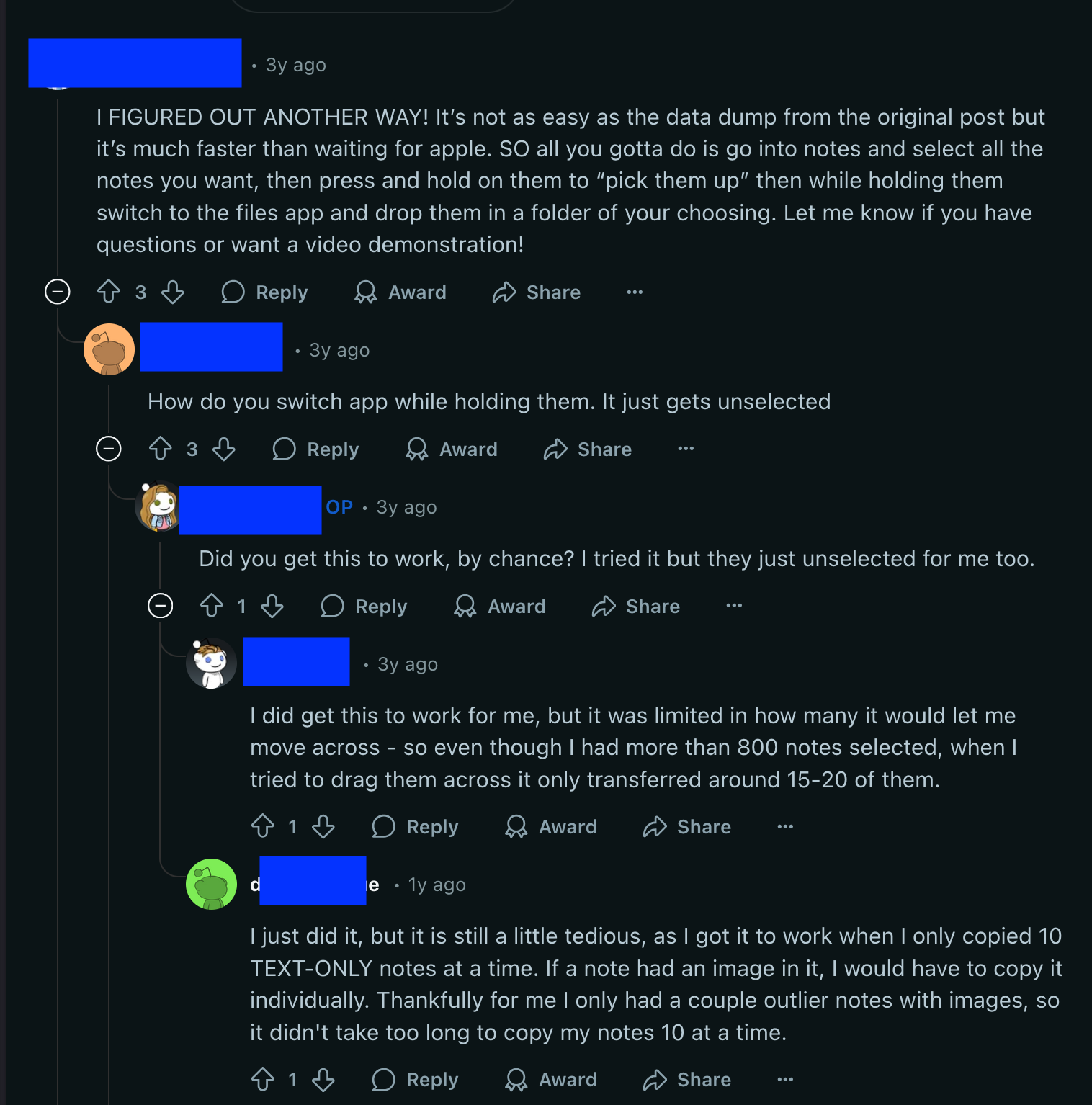
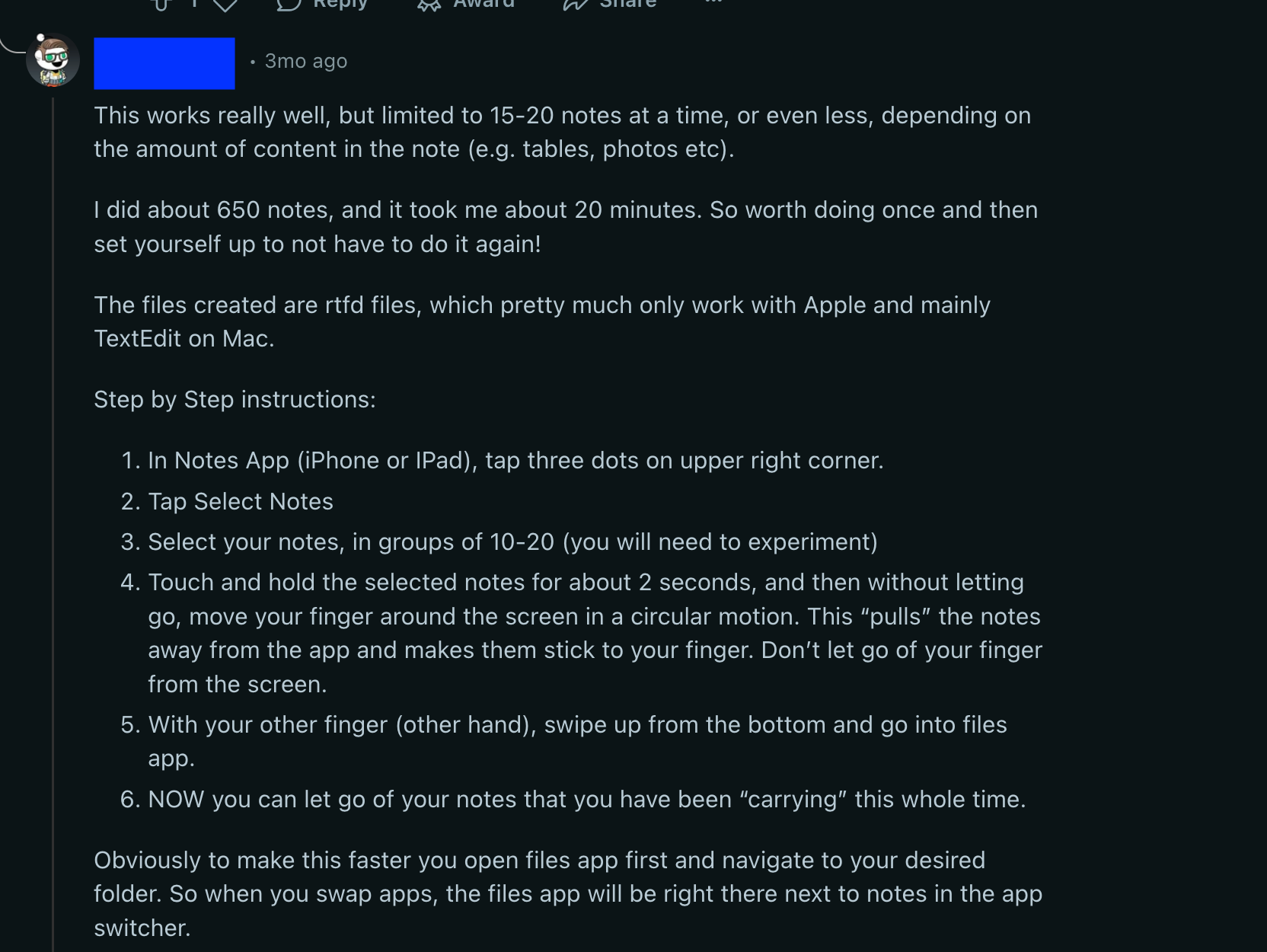
Rumor has it there's actually an exporter app on the App Store, though I'm sure Apple extracts their customary 30% innovation tax from anyone presumptuous enough to help users escape their walled garden.
The Silicon Valley Playbook
Roam and its alternatives grasp what most productivity apps miss: tasks emerge organically from thinking. Compare this to the bullshit productivity ecosystem: "dedicated" task managers that never talk to your notes, or note apps with tacked-on todo features that hide your tasks in nested hierarchies of forgotten folders.
And don't get me started on the AI assistants bolted onto every walled garden – Slack's AI, Microsoft's Copilot – each living in their own proprietary universe, still completely unable to talk to each other or your actual knowledge base.
Have you used Notion's search lately? It's like playing archaeological roulette – results reordering themselves before your eyes, sometimes finding what you need, often returning everything but. And when their search fails you, there's no escape hatch. I stopped using it when they offered to summon an AI genie and it couldn't even locate notes from last week.
Apple's approach might be the most frustrating of all – building a walled garden around even the most basic utility like notes, while Wall Street hammers their stock for not releasing AI hallucination generators fast enough.
The tech industry's playbook is painfully predictable: lock your thoughts in proprietary silos, create artificial friction between those systems, then promise AI will magically excavate diamonds from digital landfills – opaque algorithms trained on god-knows-what data.
Should Logseq implode tomorrow, I'd simply point my plaintext garden at Obsidian or whatever markdown-friendly tool emerges next. And worst case, I'm one rg command away from finding anything I've ever written.
Conclusion
In a twist of cosmic timing, just as I drafted this farewell, Roam's Twitter account sputtered back to life after months of dormancy:
Roam is for people who think in outlines, jump between tabs, and write things down before they make sense. It's not just for storing what you know but it's for exploring what you don't. When you rely on such a tool, silence feels heavy.
Yeah, no shit.
They also promised a biweekly newsletter with product updates and feedback channels they'll "actually use."
The cosmic irony isn't lost on me; after years of preaching sustainable software development, I got exactly what I asked for – a self-funded product that never sold out, never monetized my data, and focused on their original vision – yet somehow that wasn't enough for me. Instead, I've become that restless user who leaves without providing feedback.
When digital thinking tools become extensions of your brain, radio silence creates a peculiar anxiety. It's like dating someone who ghosts you for weeks, then texts profound insights at 3AM as if nothing happened.
But ultimately, I paid for five years and got five years – contract fulfilled, relationship complete. Maybe that's the healthiest digital breakup I've ever had: no dramatic exports at midnight, no desperate data scraping, just a clean severance of professional boundaries.
The real catch-22 of my current setup is that I don't truly have full access to my second brain until I solve the mobile sync problem. For now, I’ve gained ownership at the cost of mobility; the revolution of truly portable thought remains stubbornly out of reach.
Fortunately, the plain Markdown foundation should provide an elegant escape hatch. Not only can I build/use any sync system I want (given enough caffeine and stubborn determination), but should I change my mind about Logseq entirely, I'd be up and running with Obsidian in approximately 20 minutes. Just point it at the same folder and we're golden.
Hell, if Roam delivers on their renewed promises, my plain text files would happily make the journey back. I've already proven I'm willing to throw four-figure sums at note-taking tools. I'd throw another stack of cash at Roam tomorrow for local hosting with reliable sync. But until that unicorn appears, I guess I'll keep using Logseq's leaky bucket while manually hauling water from Apple Notes, grateful for the privilege of doing twice the work.
Every system disappoints you in its own special way. You just pick which flavor of technical debt you're willing to inherit. I'm finding Logseq's whiteboarding turning out to be accidentally useful. And the plugin ecosystem isn't dead yet, which counts as a roaring success in this space.
Silicon Valley builds these digital roach motels because data lock-in is the business model. What looks like a productivity revolution is actually the same old SaaS customer acquisition strategy: make it easy to get in, nearly impossible to get out. We keep falling for it because we're desperate to outsource our memory to something more reliable than our brains, seeking immortality for our thoughts.
All of these systems are fundamentally attempts to battle entropy anyway – transient solutions to having too many thoughts and not enough memory. We organize, tag, and structure, but the universe inexorably trends toward disorder. At least my pasta recipes will now survive whatever half-baked pivot the next CEO dreams up after a weekend ayahuasca retreat, and hopefully will whatever system replaces this one in five years when I inevitably write another migration post.
See you at the next funeral. I'll bring my Markdown files.
The Technical Postscript
Migrated by exporting my Roam database as JSON, then importing it directly into Logseq. Remarkably anticlimactic.
For downloading Firebase images, I hacked together a quick script that yanks them locally and fixes references. They are here if you want them.